
Long runs
A fully bonded floor does not rely on the same perimeter expansion behavior as a floating click system.
Glue-down LVP is a different installation system from rigid-core click flooring. CFS will launch glue-down LVP/LVT as a project-quoted category rather than stocked ecommerce. Review the installation considerations, then send the project requirements for product, availability, freight and documentation.
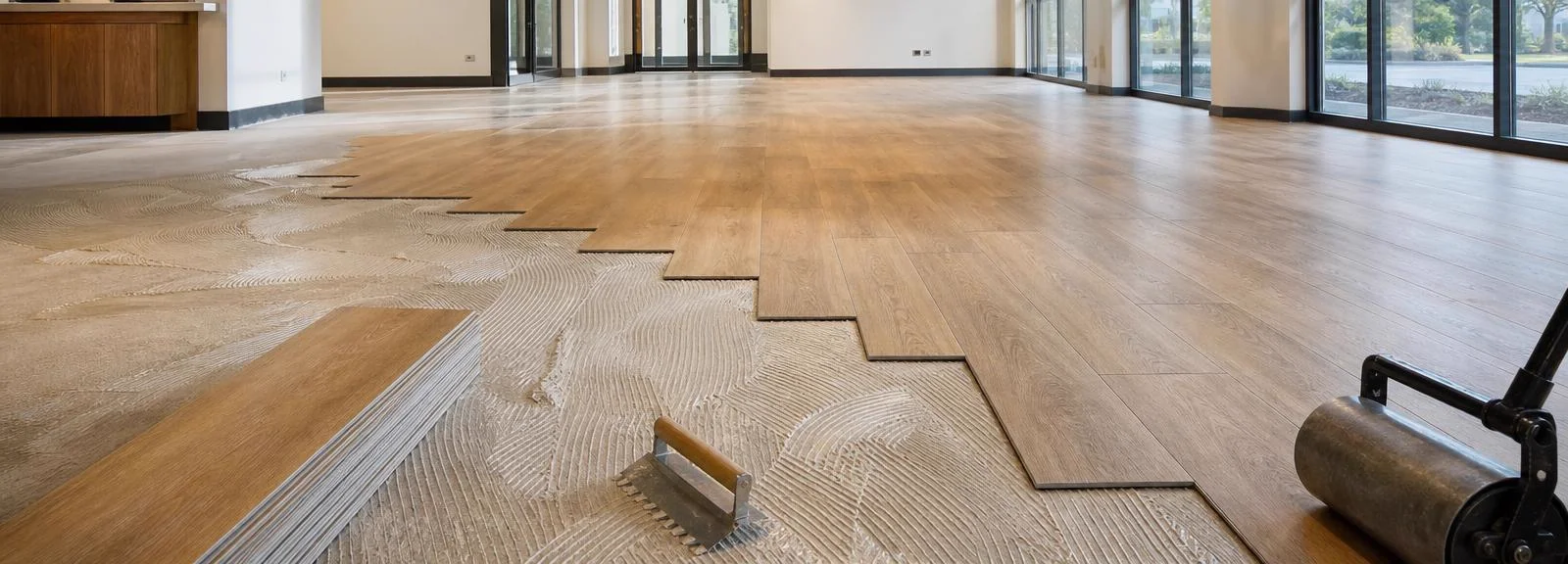
A fully bonded floor does not rely on the same perimeter expansion behavior as a floating click system.
Projects with carts, chairs or rolling equipment may evaluate bonded construction differently from floating flooring.
Individual plank replacement and localized repair strategy differ from click-lock flooring.
Lower-profile construction may help where door clearances, adjacent finishes or transition heights are tight.
Final installation must follow the selected manufacturer's instructions and the installer's site assessment.
Flatness, surface condition, old adhesive and moisture conditions can change preparation and product choice.
Thin flexible flooring can telegraph substrate imperfections, so patching and smoothing matter.
Adhesive selection, open time and application rate belong to the manufacturer-approved system.
Layout, working time and rolling requirements affect the bond and finished appearance.
Traffic and rolling loads should not be introduced before the system is ready under the installation instructions.
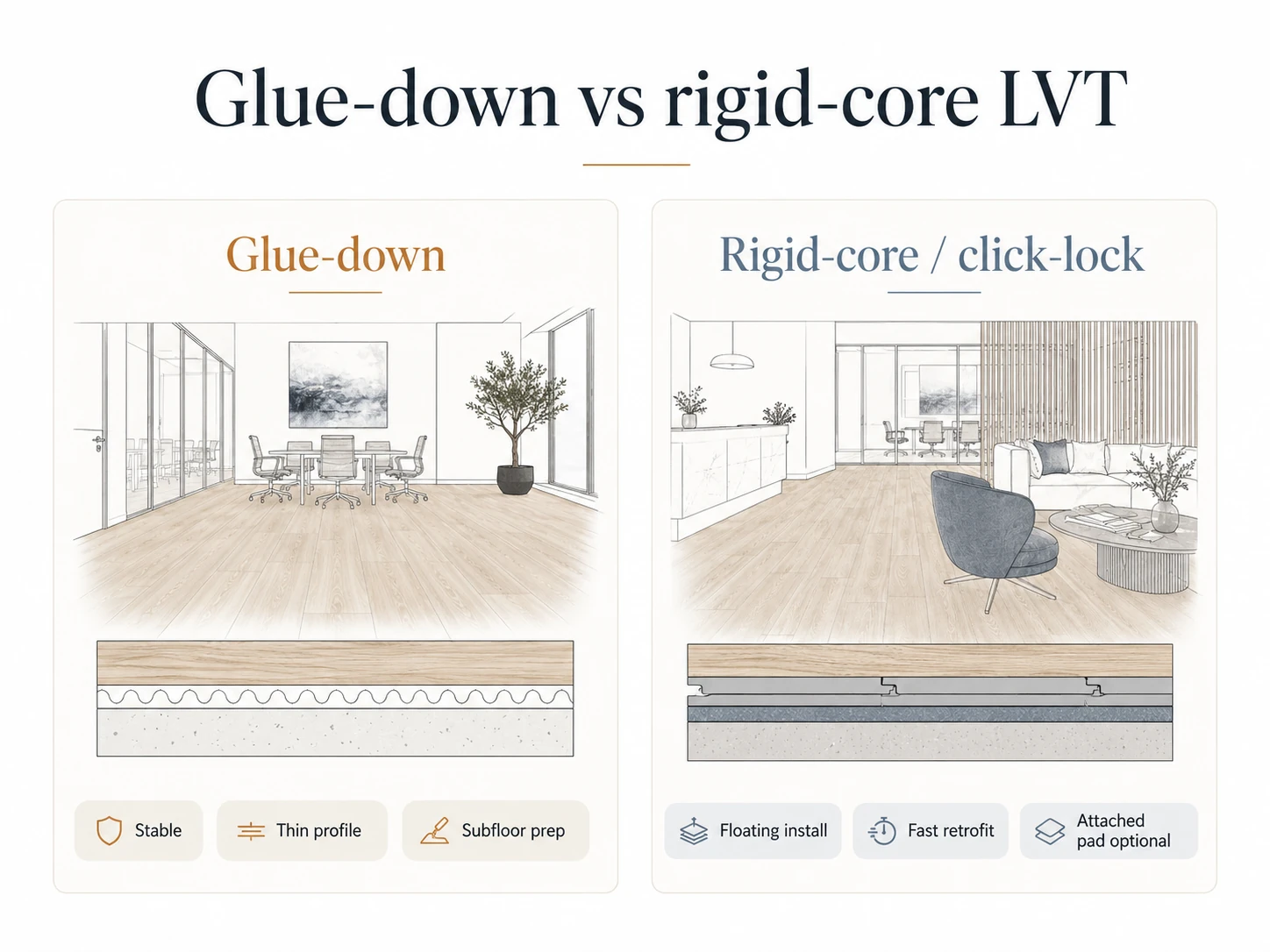
The products can share a similar wood visual while behaving very differently during installation and future repair. Choose by project conditions, not by image alone.
A thin flexible plank follows the surface below it more closely than a rigid floating product. High spots, patch edges, old adhesive residue, cracks and abrupt changes in flatness can telegraph through the finished floor, so preparation quality has a direct effect on appearance.
Adhesive is not a generic accessory. The selected flooring manufacturer may specify particular adhesive types, trowel notches, open times, working times, rolling procedures and traffic restrictions. Temperature, humidity, substrate porosity and moisture conditions can also change the installation plan. Those decisions belong to the installer and project requirements, with current manufacturer instructions controlling the final system.
Bonded construction can make individual plank replacement and long-run layout easier in some commercial projects, but it is not automatically faster or less expensive. Preparation, adhesive, labor and downtime have to be evaluated against the floating alternative. Use the installation-method comparison guide when the project is still open to both paths.
When a bonded resilient floor is installed in an operating building, the project team has to coordinate furniture movement, access, preparation dust, adhesive odor expectations, open and working times, rolling, protection and the point at which normal traffic can return. Those constraints can influence whether work is phased by room, corridor or zone.
They also affect installed cost. A material with a lower square-foot price can still create a more expensive project if preparation and phasing are extensive. Compare the whole installation path rather than material price alone, and use the current adhesive and flooring instructions when building the schedule.
Send the product or approved-equal criteria, square footage, delivery ZIP, substrate information when known, installation schedule and any project documentation requirements. CFS will confirm a source program rather than implying launch stock.