
Commercial Flooring Options: Compare Products, Installation & Project Fit
Compare commercial flooring options by the conditions that actually change the job: traffic, rolling loads, moisture, acoustics, substrate condition, installation method, maintenance, and schedule. CFS stocks LVP/SPC, rigid-core LVT formats and commercial laminate with published pricing; glue-down LVT, VCT, carpet tile, rubber and commercial tile are quoted per project.
Why LVP fits so many commercial projects
LVP is common in commercial projects because buyers can choose between rigid-core floating construction and fully bonded glue-down construction without giving up a wood- or stone-look finish. That flexibility makes it easier to match the installation method to the room rather than forcing one product into every condition.
The important distinction is the complete assembly. Product construction, substrate preparation, adhesives or underlayment, transitions, perimeter details and the manufacturer’s installation instructions all affect how the finished floor performs.
Commercial vinyl flooring: compare the construction before the visual
Rigid-core SPC can simplify some renovations and phased work. Glue-down LVT creates a thin, fully bonded floor that can be a strong fit for rolling loads, large continuous areas and low-profile transitions. In spaces that require a welded-seam resilient assembly for fluid control, commercial sheet flooring may be the more appropriate specification even though it is outside the current stocked CFS catalog.
Commercial LVT flooring: glue-down for a fully bonded installation
Glue-down LVT can have a lower material cost than a comparable rigid-core floor, but it is usually less forgiving of the existing substrate and more labor-intensive to install. Because the thin flooring is bonded directly to the slab or prepared surface, flatness, patching, smoothing, grinding, moisture conditions, adhesive requirements and surface cleanliness matter more. Imperfections can telegraph through the finished floor.
That means a lower product price does not automatically mean a lower installed price. On a slab that needs corrective work, preparation and labor can outweigh the material savings. The tradeoff is a low-profile, fully bonded floor with minimal lateral movement when the substrate and installation are correct.
SPC rigid core: click-lock speed for turns and fit-outs
SPC click-lock flooring can reduce adhesive steps and can work well for unit turns, tenant improvements and phased renovations when the product instructions permit a floating installation. Rigid core can be more forgiving of minor surface variation than thin glue-down flooring, but it still requires a flat, stable substrate and should not be used to hide a failing slab.
Commercial grade flooring: what the spec should prove
Commercial grade flooring should be supported by measurable product data rather than a label alone. Depending on the construction, review the wear layer or abrasion rating, total construction, commercial warranty, applicable ASTM classifications or test reports, installation instructions, maintenance requirements, static-load information where relevant, and any indoor-air-quality documentation required by the project.
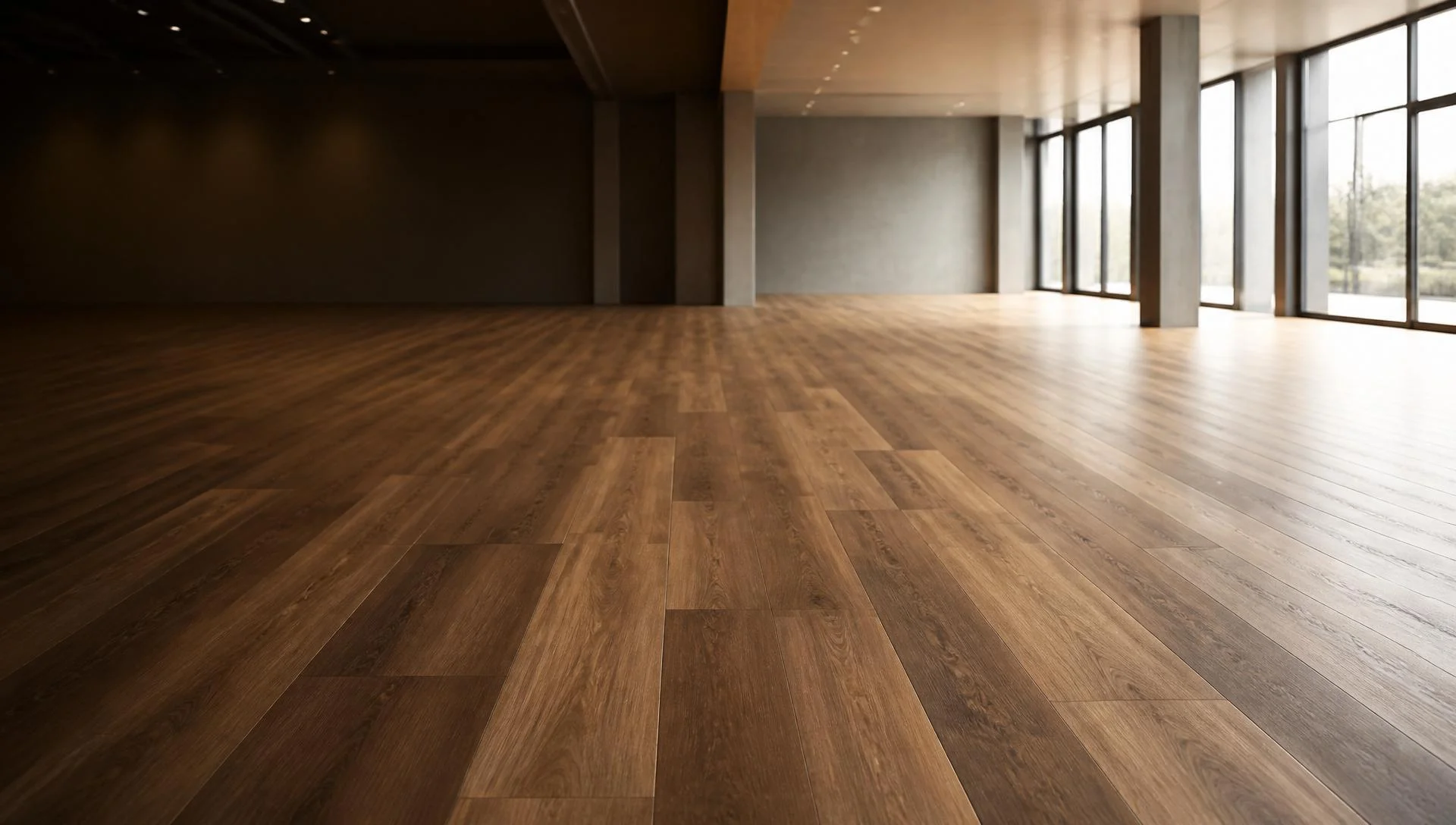
Commercial flooring options compared
Use this table to build the shortlist. The buying lane tells you whether CFS currently sells the material from stocked inventory or quotes it by project. The installation and substrate columns are where two products with similar material prices can end up with very different installed costs.
| Category | CFS buying lane | Installation | Subfloor / prep | Strong project fit |
|---|---|---|---|---|
| SPC / Rigid-Core LVP | Published stocked pricing | Click-lock / floating | Flat, stable substrate required; more forgiving of minor variation than thin glue-down flooring | Unit turns, tenant improvements, multifamily, hospitality, office |
| Glue-Down LVT / LVP | Quoted per project | Full-spread adhesive | Most prep-sensitive; patching, smoothing and moisture work may be required | Rolling loads, continuous areas, low-profile transitions, long-term installations |
| Commercial Laminate | Published stocked pricing | Click-lock / floating | Dry, flat and stable substrate required | Offices, multifamily and other dry interiors where a wood visual and value matter |
| VCT Flooring | Quoted per project | Full-spread adhesive | Prepared substrate; finish and maintenance program should be planned | Institutional and back-of-house areas where the maintenance program is understood |
| Commercial Carpet Tile | Quoted per project | Specified adhesive / modular installation | Prepared, dry substrate | Offices, classrooms and zones where in-room sound absorption matters |
| Gym & Rubber Flooring | Quoted per project | Glue-down or system-specific installation | Depends on product thickness, substrate and impact requirements | Fitness, impact and specialty areas |
| Commercial Tile / Porcelain | Quoted per project | Thin-set / specified tile system | Flatness, movement accommodation and wet-area details are critical | Lobbies, restrooms, restaurant areas and other hard-surface zones |
Shop in-stock products
-
 20 MIL COMMERCIAL
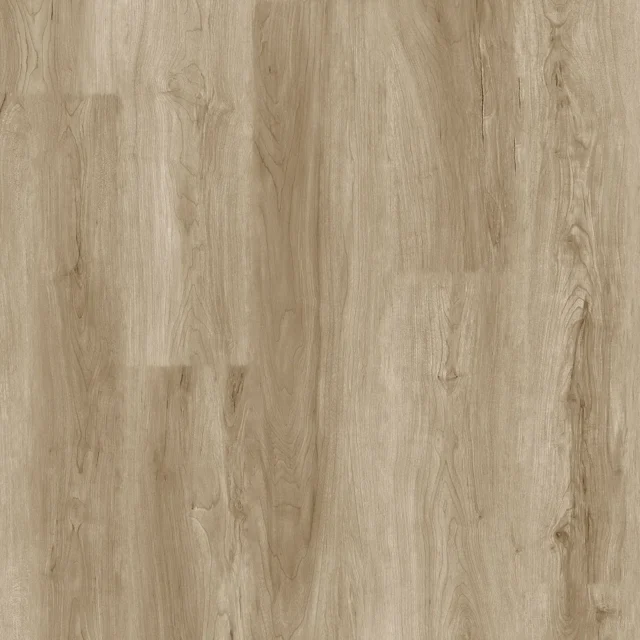
TruGrade™ XL 20 · CFS Prairie Natural Oak Commercial Vinyl Plank Flooring (SPC) SPC · 6 mm · 20 Mil · 9"x60" · 26.60 sf/box$1.50/sq ft$39.90 /carton · 26.6 sq ft
20 MIL COMMERCIAL
TruGrade™ XL 20 · CFS Prairie Natural Oak Commercial Vinyl Plank Flooring (SPC) SPC · 6 mm · 20 Mil · 9"x60" · 26.60 sf/box$1.50/sq ft$39.90 /carton · 26.6 sq ft -
 22 MIL COMMERCIAL
Summit 22 · CFS Manor Blonde Commercial Vinyl Plank Flooring (SPC) SPC · 8 mm · 22 Mil · 5"x27" · 11.757 sf/box$1.50/sq ft$17.64 /carton · 11.757 sq ft
22 MIL COMMERCIAL
Summit 22 · CFS Manor Blonde Commercial Vinyl Plank Flooring (SPC) SPC · 8 mm · 22 Mil · 5"x27" · 11.757 sf/box$1.50/sq ft$17.64 /carton · 11.757 sq ft -
 22 MIL COMMERCIAL
TruGrade™ Ultra 22 · CFS Sterling Oak Commercial Vinyl Plank Flooring (SPC) SPC · 8 mm · 22 Mil · 9"x60" · 19.29 sf/box$1.50/sq ft$28.94 /carton · 19.29 sq ft
22 MIL COMMERCIAL
TruGrade™ Ultra 22 · CFS Sterling Oak Commercial Vinyl Plank Flooring (SPC) SPC · 8 mm · 22 Mil · 9"x60" · 19.29 sf/box$1.50/sq ft$28.94 /carton · 19.29 sq ft -
 20 MIL COMMERCIAL
CityStone 20 · CFS Urban Concrete Commercial LVT Flooring (SPC Tile) SPC · 5.7 mm · 20 Mil · 18"x36" · 27.5 sf/box$1.50/sq ft$41.25 /carton · 27.5 sq ft
20 MIL COMMERCIAL
CityStone 20 · CFS Urban Concrete Commercial LVT Flooring (SPC Tile) SPC · 5.7 mm · 20 Mil · 18"x36" · 27.5 sf/box$1.50/sq ft$41.25 /carton · 27.5 sq ft -
 20 MIL COMMERCIAL
Plaza Square 20 · CFS Gallery Stone Commercial LVT Flooring (SPC Tile) SPC · 7 mm · 20 Mil · 36"x36" · 18.024 sf/box$1.50/sq ft$27.04 /carton · 18.024 sq ft
20 MIL COMMERCIAL
Plaza Square 20 · CFS Gallery Stone Commercial LVT Flooring (SPC Tile) SPC · 7 mm · 20 Mil · 36"x36" · 18.024 sf/box$1.50/sq ft$27.04 /carton · 18.024 sq ft -
 AC6 LAMINATE
Timberline AC6 · CFS Natural Elm AC6 Commercial Laminate Flooring Laminate · 8 mm · AC6 · 7"X52" · 22.24 sf/box$1.50/sq ft$33.36 /carton · 22.24 sq ft
AC6 LAMINATE
Timberline AC6 · CFS Natural Elm AC6 Commercial Laminate Flooring Laminate · 8 mm · AC6 · 7"X52" · 22.24 sf/box$1.50/sq ft$33.36 /carton · 22.24 sq ft -
 AC5 LAMINATE
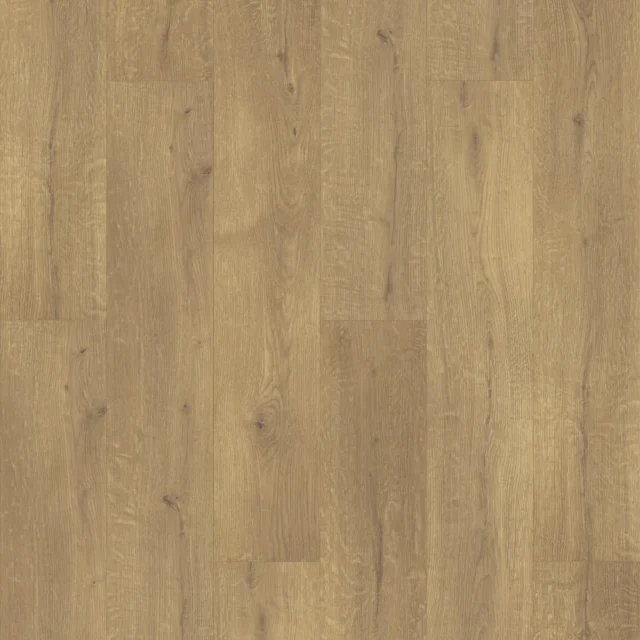
Reserve AC5 · CFS Bourbon Oak AC5 Commercial Laminate Flooring Laminate · 7 mm · AC5 · 8"x48" · 36.43 sf/box$1.50/sq ft$54.65 /carton · 36.43 sq ft
AC5 LAMINATE
Reserve AC5 · CFS Bourbon Oak AC5 Commercial Laminate Flooring Laminate · 7 mm · AC5 · 8"x48" · 36.43 sf/box$1.50/sq ft$54.65 /carton · 36.43 sq ft -
 AC6 LAMINATE
Highland AC6 · CFS Aegean White Oak AC6 Commercial Laminate Flooring Laminate · 8 mm · AC6 · 9"X51" · 20.3 sf/box$1.50/sq ft$30.45 /carton · 20.3 sq ft
AC6 LAMINATE
Highland AC6 · CFS Aegean White Oak AC6 Commercial Laminate Flooring Laminate · 8 mm · AC6 · 9"X51" · 20.3 sf/box$1.50/sq ft$30.45 /carton · 20.3 sq ft
The best commercial flooring depends on the room
A building rarely needs one material everywhere. Use these commercial flooring types as a starting point, then confirm the actual traffic, moisture, acoustic, substrate, cleaning and specification requirements for each zone.
| Space | Start by comparing | Why these belong on the shortlist | Buying lane |
|---|---|---|---|
| Multifamily units | SPC / LVP | Efficient unit-turn installation, broad visuals and straightforward plank replacement | Stocked |
| Hospitality | SPC / LVP for rooms; glue-down LVT for continuous areas | Lets the installation method change with room use, rolling traffic and transition requirements | Stocked rigid-core + quoted glue-down |
| Offices | SPC / LVP, laminate; carpet tile where acoustics drive the zone | Balances hard-surface maintenance with the option for softer acoustic areas | Stocked + project quote |
| Schools | Glue-down LVT, VCT or carpet tile by room | Different rooms can prioritize bonded durability, maintenance programs or in-room sound absorption | Project quoted |
| Healthcare | Glue-down LVT where plank is permitted; sealed resilient systems where fluid control requires them | Room-specific cleaning, rolling loads, moisture control and infection-control requirements can change the specification | Project quoted / confirm room-specific requirements |
| Restaurant & hospitality public areas | Glue-down LVT or commercial tile | Spills, chair movement, transitions, cleaning and wet-area details should drive the choice | Project quoted |
| Fitness areas | Rubber flooring | Impact, equipment and sound requirements are different from ordinary occupied areas | Quoted per project |
What actually changes the installed cost of commercial flooring materials
Material price is only the first line of the project. When you compare commercial flooring materials, normalize the installation scope so a low material number is not hiding a more expensive substrate or labor requirement.
| Cost driver | What changes the number | What to confirm before comparing bids |
|---|---|---|
| Material construction | Rigid core, glue-down LVT, laminate, VCT, carpet tile, rubber and tile carry different product and accessory requirements | Same specification, carton coverage, waste assumption and required accessories |
| Substrate preparation | Patching, smoothing, grinding, moisture correction and removal of existing finishes can add substantial labor before flooring begins | Who owns prep, what condition is assumed, and what happens if the slab falls outside tolerance |
| Installation method | Adhesive, underlayment, transitions, cure time and installation sequence change labor and schedule | Floating versus glue-down scope, adhesive/underlayment, transitions and room-access requirements |
| Freight & receiving | Destination, pallet count, delivery access and receiving requirements affect landed cost | Delivery ZIP, dock/forklift access, appointment or liftgate needs, and whether the quote is material-only or landed |
| Phasing & access | Occupied spaces, night/weekend work and room-by-room turnovers can change labor and project duration | Working hours, furniture or fixture moves, sequencing and reopening requirements |
| Maintenance & replacement | Finish programs, cleaning requirements and the ability to replace individual planks or tiles change ownership cost | Approved maintenance method, expected repair path and attic-stock plan |
For sound requirements, ask for the tested assembly
IIC and STC describe the performance of a tested floor-ceiling assembly, not a universal property of a plank, tile or attached pad. The same finish floor can produce different results over a concrete slab, wood structure, different underlayments or different ceiling assemblies.
If the project has an acoustic requirement, compare the report to the actual proposed assembly and test method before approving the floor. A product-level statement such as “good acoustic performance” is not a substitute for an assembly report that matches the project closely enough for the design team to evaluate.
In the Trade — or Buying 18,000+ Sq Ft?
Published pricing remains visible to every buyer. Approved professionals sign in to load account-specific CFS Pro pricing, while qualifying projects beginning at 18,000+ sq ft can request a separate volume, truckload, sourcing, and landed-cost review. Freight, availability, and eligibility are confirmed for the specific request.
Submit Bulk Pricing RequestACCOUNT PRICING REQUIRES APPROVAL · 18,000+ SQ FT PROJECT / VOLUME REVIEW
Frequently asked questions
Where can I buy commercial flooring?
What should I compare first when choosing commercial flooring options?
Is glue-down LVT cheaper than rigid-core SPC?
How much does commercial flooring cost?
How do acoustics affect commercial flooring selection?
What does commercial grade flooring actually mean?
What is the most durable commercial floor?
Product certification and test references should be verified in the current technical documents. General resources include ASTM International and FloorScore®.