
Project sourcing
Quoted per project around use zone, thickness, format, lead time and installation conditions.
Commercial gym flooring has to match the room, equipment and impact profile—not just the look. CFS quotes this category by project rather than carrying a fixed stocked assortment online. Our team averages 30 years of commercial flooring experience and helps buyers source the right commercial rubber flooring path for cardio rooms, free-weight zones and broader commercial fitness flooring programs.
Quoted per project around use zone, thickness, format, lead time and installation conditions.
We help match rolls, tiles and accessory transitions to cardio areas, strength areas and high-impact spaces.
If another category makes sense for adjacent spaces such as reception or office areas, we can show that without pretending LVP replaces true rubber gym flooring.
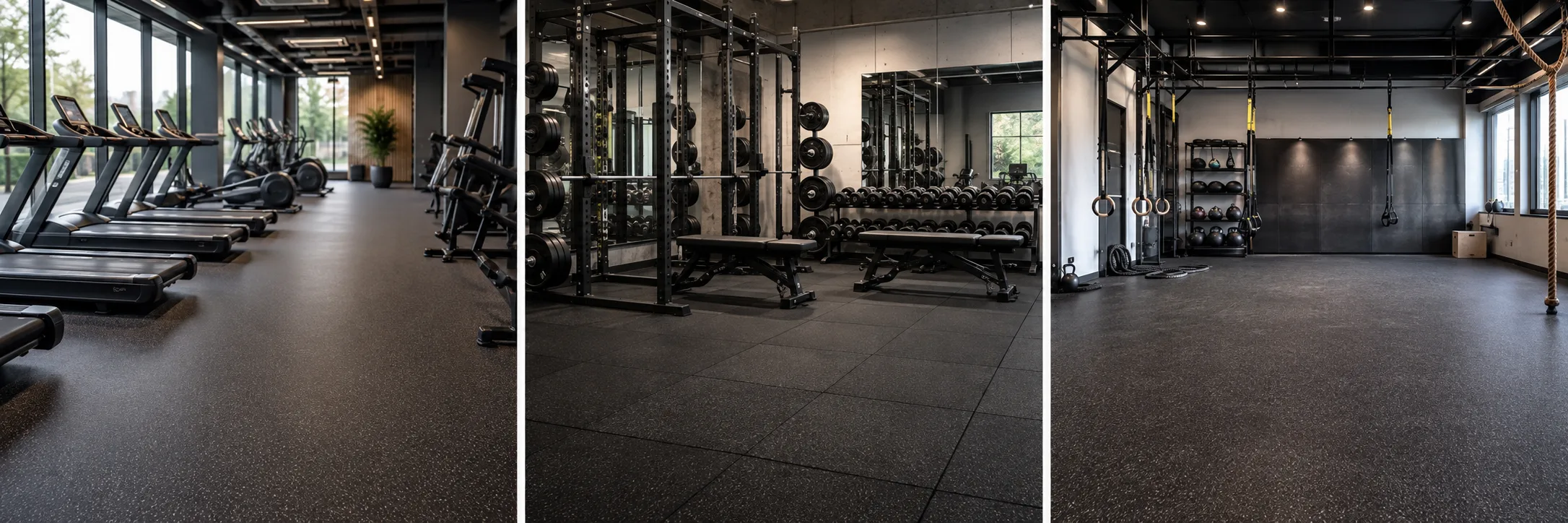
Gym rubber flooring is rarely one-size-fits-all. The right choice depends on whether the room is mostly treadmills and selectorized equipment, heavier free weights, or true drop zones. Buyers searching for rubber flooring rolls often want fewer seams for broader areas, while tile formats are often used where replacement or thicker impact protection matters.
Clean, durable rubber rolls or tiles for treadmills, bikes and lower-impact commercial fitness spaces.
Thicker rubber tile or heavy-duty systems for weight rooms, squat areas and denser equipment layouts.
Rubber systems for open training, sled lanes, battle ropes and mixed-use workout areas where durability and traction matter.
Commercial rubber flooring is usually selected by impact level first and aesthetics second. Cardio areas may perform well with thinner rolls, mixed-use training spaces often move into heavier rolls or tiles, and free-weight areas typically need thicker or denser systems.
| Zone | Typical starting point | What we confirm |
|---|---|---|
| Cardio | 8mm rubber flooring rolls | Equipment load, seam strategy and cleaning expectations |
| General fitness | 3/8" rolls or tiles | Mixed equipment, traffic and transitions |
| Free weights / impact | 1/2" to 3/4" tile systems | Drop-load risk, subfloor, upper-floor acoustics |
Rubber flooring rolls are often preferred in larger open areas because they reduce seam count and create a cleaner field. Tile systems can be easier to replace and often suit thicker or more zone-specific applications. CFS helps buyers compare both based on use, budget and installation conditions.
Because this is a sourcing category, CFS quotes commercial fitness flooring by project rather than presenting a fixed stocked assortment. We review room use, thickness expectations, square footage by zone, upper-floor or acoustic concerns, delivery ZIP and any preferred manufacturer direction before sourcing the right path.
Rubber remains the right answer for true workout and impact zones. But reception, corridor or office-adjacent spaces within a larger facility may be better served by a stocked hard-surface option such as commercial vinyl plank flooring. We can help split those areas intelligently.
A useful gym flooring request should identify the room by use zone rather than giving only one total square-foot number. Separate cardio, selectorized equipment, free-weight, functional-training and specialty areas when possible. Also tell us whether the space is on grade or above occupied space, whether heavy equipment will be moved across the floor, and whether the project has a preferred roll or tile format. Those details help the sourcing review focus on systems that fit the actual impact and maintenance conditions.
Drawings are especially helpful on fitness projects because transitions, equipment islands, wall bases and adjacent finished flooring can affect the quantity and accessory package. If the design includes a second-story weight room, the floor-covering decision should be coordinated with the project’s broader structural and acoustic strategy rather than assuming the surface material alone solves impact transmission.
The substrate, room geometry and operating schedule can influence whether rolls or tiles make more sense. Large open fields may favor fewer seams, while thicker modular systems can simplify zone changes or later replacement. Adhesive requirements, perimeter conditions and transition heights should be checked against the selected manufacturer’s current instructions before release.
CFS treats those details as part of the sourcing conversation. The goal is not to quote the thickest rubber product; it is to match the surface to the equipment, expected impact, room location and ownership plan.
CFS can review the application, source a quote-based program through our supplier network and point you toward a stocked alternative when that better serves the project.
Request QuoteQUOTE-BASED CATEGORY · PROJECT REVIEW FIRST · STOCKED ALTERNATIVES ONLY WHEN THEY FIT