Skip to content
First order? Samples are $5 — credited back on your first flooring order. Shop published pricing, apply for an approved CFS Pro Account, and pay online or request a formal quote.
RIGID CORE BUYING GUIDE

WPC vs SPC Flooring: Which Rigid Core Fits Your Project?

The biggest difference between WPC and SPC flooring is the core beneath the printed vinyl surface. SPC is built around a dense mineral-filled rigid core. WPC uses a lighter foamed composite core. That changes how the floor feels, how it responds to point loads and temperature, and which project conditions deserve more attention.

WPCFOAMED COMPOSITE CORE
  • Softer underfoot
  • Often thicker
  • Sound-absorbing tendency
SPCDENSE MINERAL-FILLED CORE
  • Firmer underfoot
  • Higher rigidity
  • Strong point-load starting point
THE SHORT ANSWER

There Is No Universal Winner

CHOOSE SPC WHEN

Rigidity and point-load performance lead the decision

SPC is often the stronger starting point for commercial traffic, furniture loads, rolling activity and spaces where dimensional stability matters. The selected product still has to be approved for the application.

COMPARE THE COMPLETE FLOOR

Core type is only one layer of the decision

Wear layer, locking profile, total thickness, attached pad, plank format, warranty, substrate preparation and installation instructions can matter as much as the acronym printed on the carton.

CHOOSE WPC WHEN

Underfoot comfort and sound are higher priorities

WPC's foamed construction is commonly selected when a softer feel and reduced hard-surface sound are important. That does not eliminate the need to review loading, substrate and tested acoustic requirements.

WHAT ACTUALLY CHANGES

WPC vs SPC Flooring Starts With the Core

Both sit inside the broader luxury-vinyl family, but manufacturer terminology is not perfectly uniform. The useful distinction is physical: SPC is a dense rigid core, while WPC is a foamed composite core. That difference affects feel and mechanical behavior more directly than the marketing name.

Do not assume the rest of the plank is identical. Wear layers, finishes, locking systems, attached pads and overall construction vary by product, so the final comparison should always use the current technical data for the two actual floors being considered.

TYPICAL RIGID-CORE STACK
Wear surface
Decor film / vinyl layer
Core changes here
WPC · FOAMEDSPC · DENSE
Backing / pad when included

Construction varies by manufacturer. Use the selected product's current technical and installation documents.

SIDE-BY-SIDE

WPC vs SPC Flooring Comparison

Decision factorSPC flooringWPC flooring
Core structureDense, mineral-filled rigid compositeFoamed composite rigid core
Underfoot feelFirmer and harderTypically softer and warmer-feeling
Rigidity / compressionDense core is a strong starting point for point loads and indentation concernsSofter core can compress more under concentrated loads
Sound tendencyHarder construction can sound sharper without the benefit of the full assemblyFoamed core tends to absorb more sound within the plank
Product thicknessOften offered in thinner rigid constructionsOften offered in thicker constructions
Temperature / dimensional behaviorDense construction is commonly selected where dimensional stability is a priorityProduct-specific; review exposure limits and installation instructions
SubfloorNeither core excuses an out-of-tolerance substrate. Flatness and preparation follow the manufacturer's requirements.
Water exposureBoth core types are designed to resist water, but the installed floor is not automatically a waterproof room assembly.
Commercial useCommon commercial starting point; verify full product rating and warrantyCan fit comfort-led applications when the selected product is approved for the traffic and loads
CHOOSE BY PROJECT CONDITION

Where the WPC vs SPC Decision Actually Changes

The core should follow the project problem you are trying to solve. These are better decision triggers than choosing a core because one acronym sounds newer or more durable.

ROLLING + POINT LOADS

Favor rigidity, then verify the complete product

Furniture legs, carts, fixtures and concentrated loads make core compression and locking-system performance important. SPC is often the logical first comparison.

BEDROOMS + GUEST ROOMS

Comfort can move WPC up the list

Where people notice hardness and room sound more than rolling loads, WPC's softer construction can be valuable.

UPPER FLOORS

Do not choose from the core label alone

WPC can have a quieter tendency, but project acoustic requirements belong to the complete tested floor-ceiling assembly.

LARGE WINDOWS + TEMPERATURE SWINGS

Review dimensional limits before appearance

SPC is commonly considered for demanding temperature exposure, but the actual manufacturer's limits and expansion requirements control.

IMPERFECT SUBSTRATE

Preparation still wins

A thicker WPC may feel more forgiving, but neither construction should be used to hide a slab or wood subfloor that falls outside installation tolerances.

MOISTURE-PRONE AREAS

Separate plank water resistance from the room assembly

Core material is only one piece. Seams, perimeter details, transitions, penetrations and what sits below the floor still matter.

WHAT BUYERS OFTEN MISS

Three Shortcuts That Create Bad Comparisons

01

“WPC is quieter, so the acoustic requirement is solved.”

No. Core construction affects sound tendency, but IIC/STC performance is evaluated at the tested assembly level.

02

“A thicker WPC will fix a rough subfloor.”

No. Thickness may change feel, but flatness, moisture and preparation requirements still apply.

03

“A bigger wear-layer number means better dent or scratch resistance.”

Wear layer relates to surface wear. Core density, finish chemistry, locking system and the type of load are separate variables.

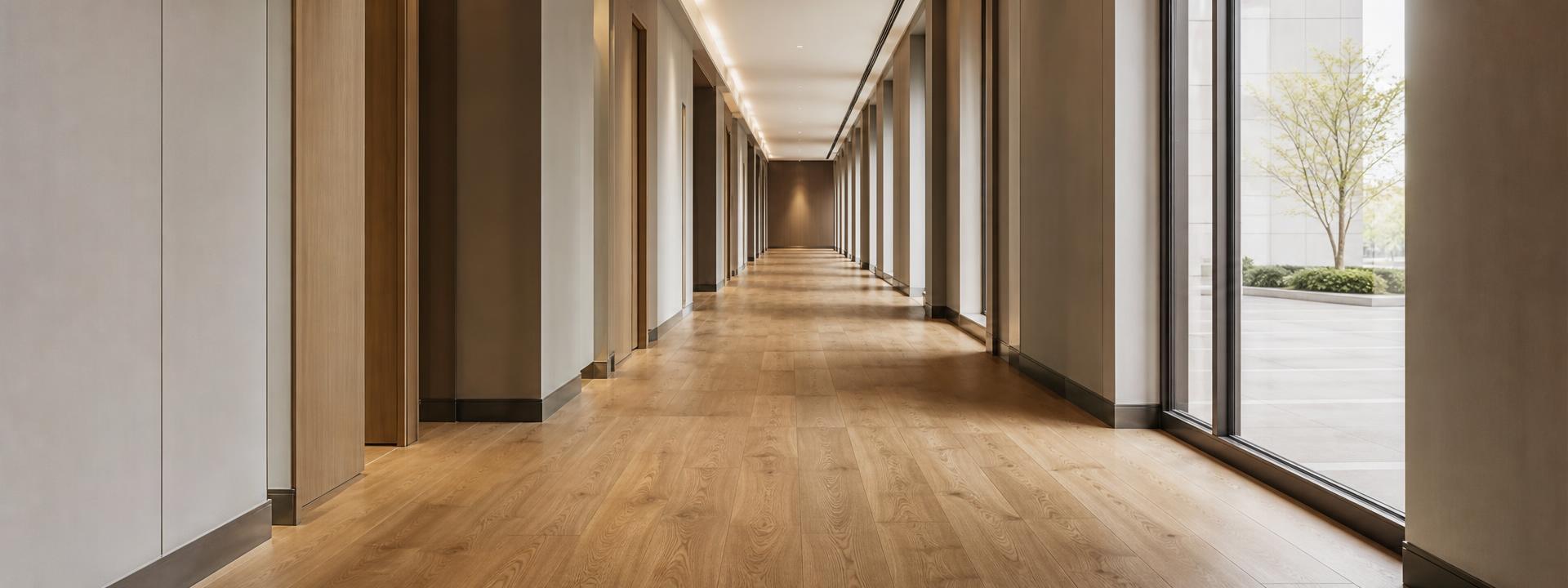
SPC flooring installed in a finished interior
INSTALLATION MATTERS

The Best Core Can Still Fail in the Wrong Installation

One of the most useful themes in buyer and installer discussions is that the carton specification does not replace installation discipline. Before choosing between WPC and SPC, compare the two manufacturers' requirements for:

  • Subfloor flatness and preparation
  • Moisture testing or vapor-control requirements
  • Perimeter expansion and transitions
  • Fixed cabinetry and heavy fixtures
  • Approved attached pad or additional underlayment
  • Rolling loads and furniture protection

The exact installation instructions for the selected SKU should settle those questions—not a generic rule about WPC or SPC.

CFS PRODUCT PATH

Shopping SPC Now? Start With Stocked Rigid-Core Products

CFS currently has verified stocked SPC / rigid-core products available for online purchase. We do not label WPC as stocked unless current catalog data supports it. If a project specifically requires WPC, CFS can review the requirement through the project-sourcing path.

THE DECISION RULE

Choose the Floor, Not Just the Core

If the project prioritizes rigidity, point-load behavior and dimensional stability, start your comparison with SPC. If it prioritizes softer underfoot feel and sound absorption within the plank, include WPC. Then compare the actual products side by side—wear layer, locking system, backing, approved use, warranty and installation requirements.

WPC vs SPC Flooring FAQs

Which is better, WPC or SPC flooring?
Neither is automatically better. SPC uses a denser rigid core and is often chosen where rigidity, indentation resistance and dimensional stability matter. WPC uses a foamed composite core and is often chosen where a softer, quieter underfoot feel matters. Compare the complete product and the installation requirements for the space.
Does WPC flooring feel softer than SPC?
WPC is generally built around a foamed composite core, so it commonly feels softer and less hard underfoot than a denser SPC core. Attached pad, total construction and the subfloor also affect the finished feel.
Is SPC more dent resistant than WPC?
A dense SPC core generally resists compression and point loading better than a softer foamed WPC core, but actual indentation performance depends on the complete product, load, furniture contact area and installation conditions.
Are WPC and SPC floors waterproof?
The core materials are designed to resist water exposure, but that does not make the installed room a waterproof assembly. Seams, perimeter gaps, transitions, penetrations, substrate conditions and manufacturer installation requirements still matter.
Does WPC hide an uneven subfloor better than SPC?
A thicker or softer product can change how minor texture feels underfoot, but neither WPC nor SPC is a substitute for required subfloor preparation. Both should be installed over a substrate that meets the selected manufacturer's flatness and preparation requirements.
Which core is better for commercial flooring?
SPC is often a strong commercial starting point because its dense core suits many traffic and point-load conditions, but core type alone does not approve a product for commercial use. Check the wear layer, locking system, total construction, warranty, rolling-load requirements, substrate and the manufacturer's approved application.

Sources reviewed for this guide: Bona, Garrison Collection, Johnson Hardwood, plus buyer/installer discussion reviewed for practical questions. Product-specific claims should be confirmed against the selected manufacturer's current technical and installation documents.