
LVP Wear Layer Guide: What 12, 20 and 28 Mil Mean
The LVP wear layer is the transparent surface layer that protects the printed visual, measured in mils rather than millimeters. It is an important comparison point, but traffic, finish chemistry, warranty, maintenance, construction, and installation still determine whether a product fits the project.
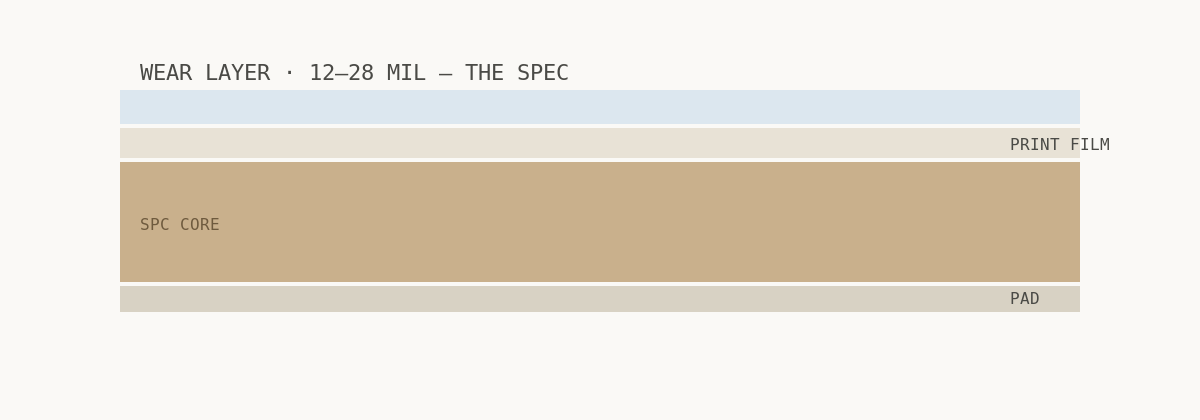
LVP wear layer: the number that is the spec
The LVP wear layer — the clear urethane-coated vinyl film on top of the plank — is the single spec that determines whether a floor survives its environment. Not thickness, not brand, not visual. Wear layer is measured in mils (thousandths of an inch, not millimeters), and the difference between 12 mil vinyl plank flooring and 20 mil vinyl plank flooring is the difference between a rental-turn product and a commercial floor.
Wear layer thickness chart: 6 to 40 mil
| Wear layer | Grade | Right environment | Typical warranty |
|---|---|---|---|
| 6–8 mil | Entry residential | Light-traffic homes only | 5–10 yr residential |
| 12 mil | Rental / builder | Turns, flips, budget multifamily | 10–15 yr res / light comm |
| 20 mil | Commercial standard | Offices, retail, hotels, multifamily common areas | 10–15 yr commercial |
| 28 mil | Heavy commercial | Corridors, education, healthcare | 15–20 yr commercial |
| 30–40 mil | Extreme / specialty | Airports, heavy retail | 20 yr+ commercial |
12 mil vinyl plank flooring: where it belongs
12 mil vinyl plank flooring is the value engineering sweet spot for rental units and flips — it survives tenants and pets at $1.79–$2.10/sf project pricing, and its failure mode is gradual dulling rather than catastrophic. It does not belong in common areas, retail, or anywhere a commercial warranty needs to hold; the same traffic that a 20 mil floor shrugs off will pattern-wear a 12 mil lane in 18–24 months.
20 mil vinyl plank flooring: the commercial line
For CFS market-comparison purposes, we group 20 mil and above as commercial-grade LVP, while still evaluating total thickness, construction, plank format, installation method and the manufacturer’s stated application. Current material pricing changes over time; see the 2026 LVP flooring cost index for the latest everyday advertised-market ranges.
Mil vs mm: don’t get caught
A mil is 1/1000 of an inch; a millimeter is ~39 mils. Import listings sometimes quote wear layer in mm (0.3mm ≈ 12 mil, 0.5mm ≈ 20 mil, 0.7mm ≈ 28 mil) — and occasionally quote total thickness hoping you’ll read it as wear layer. When comparing quotes, convert everything to mils and compare the wear layer line only; a thick plank with a thin wear layer is upholstery over particleboard.
What the wear layer doesn’t do
Wear layer governs abrasion, not indentation (that’s core density and total construction), not dimensional stability (core type — see SPC vs WPC), and not slip (surface texture). Read it as the traffic spec, and read the rest of the sheet for the rest.
Verify it, don’t trust it
The wear layer number should appear on the spec sheet, the carton label, and the warranty document with the same value in all three places. Every quote we send lists wear layer per SKU, and every sample ships with its spec sheet so you can check the mil rating against the product in hand.
In the Trade — or Buying 18,000+ Sq Ft?
Published pricing remains visible to every buyer. Approved professionals sign in to load account-specific CFS Pro pricing, while qualifying projects beginning at 18,000+ sq ft can request a separate volume, truckload, sourcing, and landed-cost review. Freight, availability, and eligibility are confirmed for the specific request.
Submit Bulk Pricing RequestACCOUNT PRICING REQUIRES APPROVAL · 18,000+ SQ FT PROJECT / VOLUME REVIEW
Vinyl Plank Wear Layer Explained
The vinyl plank wear layer is the transparent layer above the printed visual. It absorbs everyday abrasion and helps protect the design, but it works together with the finish system rather than acting alone.
How to Read a 20 Mil Wear Layer
A 20 mil wear layer is 0.020 inch thick. It is a common commercial specification, but two 20 mil products can still differ in finish, warranty, core, locking profile, embossing, and approved application.
Commercial LVP Wear Layer Selection
Commercial LVP wear layer selection should begin with traffic, rolling loads, maintenance, expected service life, and warranty. Choosing the highest number without reviewing the rest of the product can add cost without solving the actual risk.
What Is the Best Wear Layer for LVP?
The best wear layer for LVP is the one supported by the complete product and warranty for the intended room. Light commercial, multifamily, hospitality, retail, and healthcare projects may make different choices even when the visuals are similar.
Do Not Confuse Wear Layer With Total Thickness
Wear layer describes only the protective surface. Total thickness includes the rest of the construction and affects a different set of performance and installation questions.
Product certification and test references should be verified in the current technical documents. General resources include ASTM and FloorScore.
Frequently asked questions
What is a good wear layer for LVP?
Is a 20 mil wear layer worth it?
What does mil mean in vinyl flooring?
Is wear layer more important than plank thickness?
Is 12 mil LVP good?
Is 20 mil LVP good?
Performance data referenced on this page follows ASTM International test methods; see also FloorScore®.